Ronda Rousey’s career cannot be understood only through championships, knockouts, or main-event headlines. Her story is equally about fame, criticism, and the emotional cost of being the first to break barriers. As a trailblazer in women’s combat sports, Ronda Rousey carried expectations far heavier than any title belt — expectations that shaped both her success and her struggles.
Long before global fame, Ronda Rousey learned what it meant to feel different. Childhood communication challenges made social interaction difficult and often isolating. These experiences forced her to develop independence and internal strength. Rather than seeking approval, Ronda learned to rely on her own discipline and determination. This mindset became a core part of her identity.
Sports offered her structure and direction. Judo, introduced by her mother, became a disciplined environment where effort mattered more than comfort. Training sessions were intense, repetitive, and mentally exhausting. Through judo, Ronda learned an important lesson early: respect is earned through consistency, not talent alone.
Her rise through competitive judo culminated in the 2008 Beijing Olympics. By winning a bronze medal, Ronda Rousey became the first American woman to achieve that honor in judo. While the moment was historic, it also came with immense pressure. Olympic success placed her in the public eye, but it did not guarantee long-term stability or financial security.
After the Olympics, Ronda experienced a reality many elite athletes face — uncertainty. Despite her achievements, opportunities were limited. This period tested her sense of purpose and forced her to reconsider what success truly meant. Rather than stepping away from competition, she chose to step into something riskier.
Mixed Martial Arts was still controversial for women at the time. Public opinion was divided, and institutional support was minimal. Entering MMA meant embracing criticism and skepticism from both fans and promoters. Ronda Rousey accepted that challenge without hesitation, understanding that change often requires confrontation.
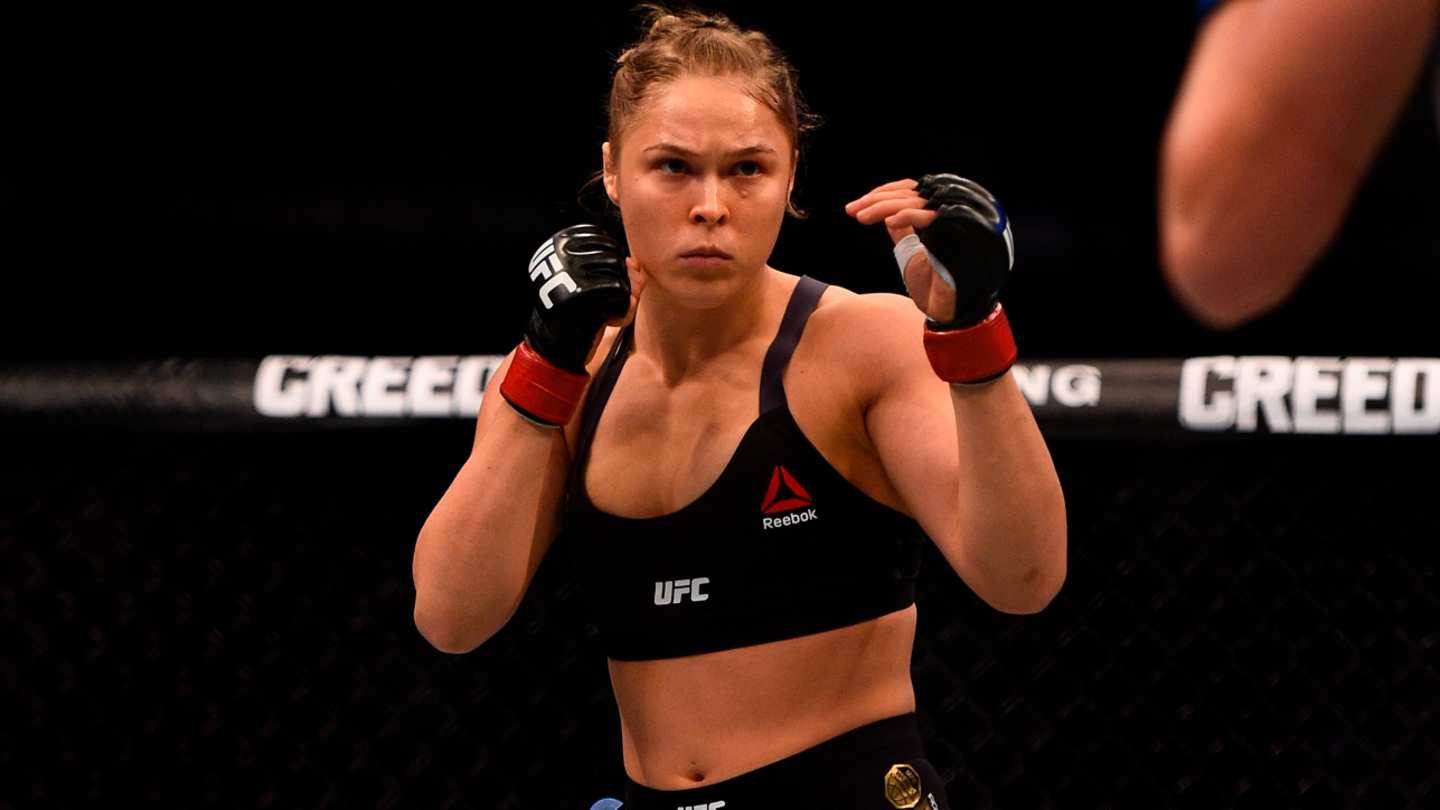 Her MMA debut quickly silenced doubts. Ronda’s judo-based grappling gave her a clear advantage, and her armbar submissions became famous. What truly set her apart was urgency — she fought as if every second mattered. Matches ended quickly, and audiences were drawn to her intensity.
As her winning streak grew, media attention exploded. Ronda Rousey became more than a fighter; she became a symbol. For supporters, she represented empowerment and progress. For critics, she was outspoken and controversial. Every word she spoke was analyzed, and every expression of confidence was magnified.
When the UFC introduced women’s divisions, Ronda became its centerpiece. As the first UFC Women’s Bantamweight Champion, she carried the responsibility of proving that women belonged on the sport’s biggest stage. Her success validated years of argument and opened doors for countless female fighters.
However, being first came with a cost. Ronda Rousey was not allowed to be average, inconsistent, or vulnerable in the public eye. Every performance was expected to be dominant. This pressure created an environment where mistakes were unforgiving and criticism relentless.
Losses marked a turning point. When Ronda faced defeat, the public narrative shifted quickly. Praise turned into scrutiny, and confidence was reframed as arrogance. These moments revealed how harshly trailblazers are judged when they falter. The emotional impact of public defeat weighed heavily on her mental health.
Ronda Rousey later spoke openly about how these experiences affected her. This honesty was rare in elite sports and challenged the expectation that champions must remain emotionally invincible. By acknowledging vulnerability, she humanized herself and connected with fans who understood the cost of pressure.
Choosing to step away from MMA was not an escape, but a decision to protect her well-being. Transitioning to professional wrestling offered a new opportunity, but also new challenges. WWE required performance, storytelling, and adaptability — skills that demanded humility and learning from the ground up.
Once again, Ronda faced skepticism. Critics questioned whether her success would translate outside competitive fighting. Rather than responding with words, she responded with effort. Training rigorously and respecting the craft, she earned her place in WWE.
Her success in wrestling demonstrated that reinvention is a form of courage. Ronda Rousey showed that identity does not need to be fixed to one achievement. By embracing change, she expanded her career and reclaimed control over her narrative.
Beyond sports, Ronda’s influence shaped broader conversations about women, strength, and ambition. She challenged the idea that women must be likable to be respected. Her unapologetic nature encouraged others to pursue excellence without shrinking themselves for approval.
Ronda Rousey also highlighted the mental health challenges faced by public figures. By speaking honestly about pressure and criticism, she contributed to a more open dialogue around emotional well-being in competitive environments. This impact extends beyond sports into culture and society.
Today, Ronda Rousey is remembered not just as a champion, but as a trailblazer who paid the price of being first. Her career reflects both triumph and sacrifice. She changed opportunities for future generations, even when the burden was heavy.
Her story reminds us that progress is rarely comfortable. Those who challenge norms often face the harshest criticism. Ronda Rousey accepted that reality and continued forward, shaping her legacy through resilience and reinvention.
In the end, Ronda Rousey’s greatest achievement may not be a medal or a championship, but the path she carved for others. She proved that being a trailblazer requires courage not only to win, but to endure scrutiny, adapt to change, and remain authentic in the face of pressure.
Her legacy stands as a powerful lesson: true impact is not measured only by victories, but by the barriers broken and the conversations changed along the way.
RR is simply amazing , fantastic , awsome 😀 😍 👌 😎 👍